Picture the pitch. A weekend getaway on a few wooded acres, a converted barn or a legal accessory apartment tucked behind the main house, and a listing agent who mentions, almost in passing, that the seller has been clearing solid income on Airbnb. The nightly rate history looks good. The reviews are glowing. It feels like a property that pays you back.
Then you close, and you find out the income doesn't transfer with the deed. In North Salem, as of this year, it can't.
The Clock Doesn't Come With The Deed
On January 27, 2026, the North Salem Town Board voted unanimously to adopt Local Law 01-2026, the town's first real framework for permitting short-term rentals. Buried inside it is a detail that matters more to a buyer than almost anything else in the ordinance: no owner is eligible to even apply for a short-term rental permit until they have owned the property for two years.
That single clause changes the math on any North Salem listing marketed around its rental income. A seller can show you three years of Airbnb statements. A buyer who closes on that property still starts the two-year clock over, from zero, on day one of ownership. The rental history belongs to the seller. It does not belong to the house.
The law is also explicit that nothing already operating gets a pass. Homes already listed on Airbnb and VRBO in North Salem are not grandfathered in. Every existing host has to apply for a conditional use permit and site plan approval through the Planning Board, the same process a brand-new applicant would go through, whether they've been hosting for six months or six years.
How North Salem Got Here
This wasn't a quiet zoning tweak. The Planning Board began examining short-term rental regulations in earnest in mid-2025, after months of what Supervisor Warren Lucas described as neighbor complaints piling up around properties operating with no oversight at all. A public hearing in August 2025 drew close to a dozen residents, and the record from that meeting is a good window into what the town was actually weighing.
Paraic Sweeney, who lives near a short-term rental on Bogtown Road, told the board the draft law had no real teeth: no cap on how many STRs the town could have, no requirement for on-site management, no way to verify a host was actually staying under the 90-day limit. He pointed out that the property near him was part of a four-listing rental operation with an agent based in Florida, which is a different animal than a neighbor renting out a spare room. Another resident, identified in meeting coverage as Nouri, pushed to cut the annual cap from 90 days to 60 and wanted stiffer fines. On the other side, Ashley Yozzo of Summit Farm on Bloomer Road said she'd never had a complaint about the STRs near her and saw them as a net positive for the town.
Planning Board Chair Cynthia Curtis led the drafting effort and was blunt about the philosophy behind it: a short-term rental permit, the town's language states, is "a privilege, not a right." Councilman Martin Aronchick called the process "transparent, painstaking" when the board finally voted. Lucas predicted other towns would eventually look at North Salem's law as a model.
What The Permit Actually Requires
Once the law took effect, the rules for anyone hosting in North Salem became specific and, in a few places, stricter than what a lot of hosts probably expected:
- A conditional use permit and Planning Board site plan approval are required before any short-term rental can legally operate, no matter how long it's been running informally.
- An owner can hold only one active STR permit at a time.
- Rental use is capped at 90 days per calendar year and no more than 13 weekends, with a weekend defined as Friday evening through Monday morning.
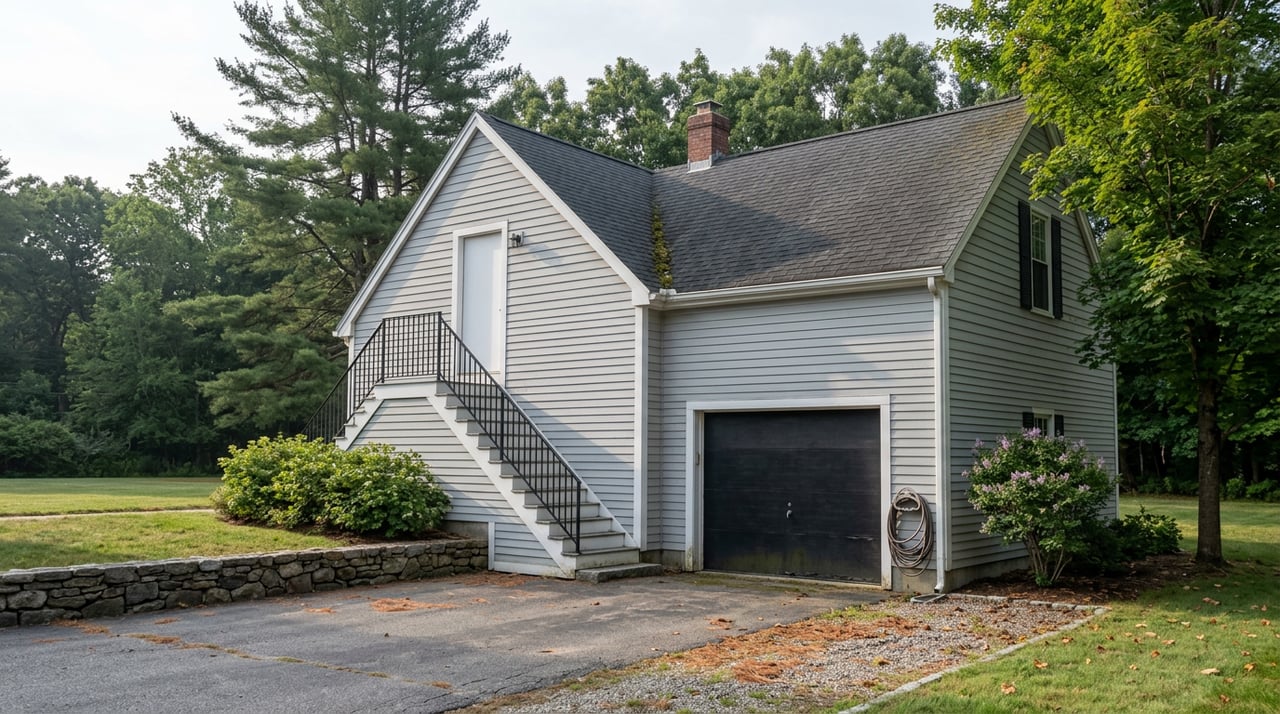
- Bedrooms used for short-term guests have to be inside the actual dwelling. Barns, garages, tents, treehouses, and RVs don't qualify, no matter how nicely they're finished out.
- The number of bedrooms allowed can't exceed what the property's septic system is rated to handle.
- If the host isn't on-site during a stay, there has to be a contact person, 18 or older, reachable around the clock.
- A guest register is required and has to be available to the building and fire inspectors, police, and emergency responders on request.
- Unaccompanied minors aren't permitted to stay.
Violations carry real consequences. A first offense can bring a fine up to $350. A second violation within five years runs $350 to $700. A third within that same five-year window jumps to $700 to $1,000, with the possibility of jail time up to six months attached to repeated non-compliance.
"Ninety days is nothing. It's gone in a flash."
That's Jessica Broomhead, speaking at the August 2025 hearing, not as an agent but as someone who hosts a short-term rental herself, in a legal accessory apartment at her Bloomer Road property. As a member of North Salem's Housing Board, she'd been following the drafting process closely, and she came to the meeting with a stake in the outcome most attendees didn't have. Her rental, advertised as a quiet alternative to a hotel for people visiting family in the area, sits near Pehquenakonck Country Club and Peach Lake, minutes from Hayfields Market and La Bastide. She told the board that roughly 95 percent of her guests are there to see relatives, not to party, and that her margins are thin enough that she cleans the unit herself between stays. Her concern that night wasn't whether the town should regulate STRs. It was the two-year ownership requirement, and whether it would unfairly box out responsible hosts who'd simply bought their homes more recently.
What This Means If You're Selling
If you currently operate an unpermitted short-term rental in North Salem, the law treats you the same as someone who's never hosted a guest. Applying for a conditional use permit means going through Planning Board review, and that review includes confirming your property is registered with Westchester County for lodging occupancy tax purposes before final site plan approval is granted.
If you're planning to list a property that's been generating short-term rental income, that income is a fact about your ownership, not a feature of the house. It's worth being direct with your listing agent about what's actually permitted versus what's simply been happening, so the marketing doesn't promise a buyer something the zoning code won't let them use.
What This Means If You're Buying
Before you let a rental income history influence your offer on a North Salem property, a few questions are worth asking directly:
- Does the seller currently hold an approved conditional use permit and Planning Board site plan approval for this property, or has the rental been operating without one?
- If a permit exists, understand that it does not transfer to you as the new owner. You'll need to reapply, and you won't be eligible until you've owned the property for two years.
- What is the property's septic capacity, and does it support the bedroom count being marketed for guest use?
- Are any of the advertised sleeping spaces in a barn, garage, or other structure that wouldn't qualify under the current code?
None of this makes North Salem a bad place to buy a home with a guest apartment or a barn conversion. It means the rental income belongs to a specific owner under a specific set of conditions, not to the address itself.
The State Adds Its Own Layer
North Salem's law doesn't operate in isolation. New York State's short-term rental registry law, signed at the end of 2024, took effect March 25, 2025, and requires hosts to register with their county or municipality. Counties that build a registry get quarterly reports from booking platforms covering rental locations, occupancy nights, guest counts, and taxes collected, and platforms can be fined for processing bookings on unregistered properties. That means a North Salem host is now working through two layers of paperwork, town and county, before a listing can legally go live.
FAQ
Does the two-year ownership rule apply if I inherit a property with an existing STR? The law ties eligibility to how long the current owner has held title. If ownership changes, whether by sale or inheritance, the clock resets under the terms adopted in Local Law 01-2026.
Can I host short-term guests in an accessory apartment instead of the main house? Yes, that's the structure Jessica Broomhead herself uses. The same permit, site plan, and 90-day cap rules still apply to the accessory unit.
What happens to STRs that were already operating before January 2026? They are not grandfathered. Every existing host has to go through the same conditional use permit and site plan approval process as a new applicant, with no exemption for prior operating history.
Does this affect condos or co-ops in North Salem the same way? The law's conditional use structure applies across the town's residential districts, but condo and co-op boards may layer their own restrictions on top of the town's rules, so it's worth checking building bylaws separately.
If you're weighing a purchase in North Salem, whether it's a rural retreat with rental potential or a straightforward family home, it helps to have someone who's followed this law from the hearing room to the vote. Jessica Broomhead can walk you through what a specific property's zoning and permit status actually allows before you write an offer. Schedule a personalized consultation to talk through the details.